After several recent crashes and a few near misses, Falls officials are stepping up traffic calming on Thornridge Drive to put the brakes on speeding and unsafe driving throughout the community.
The Supervisors on Monday approved a series of traffic calming measures recommended by traffic engineer Derrick Kennedy of Remington & Vernick Engineers following a study, traffic count and speed analysis that Kennedy conducted recently.
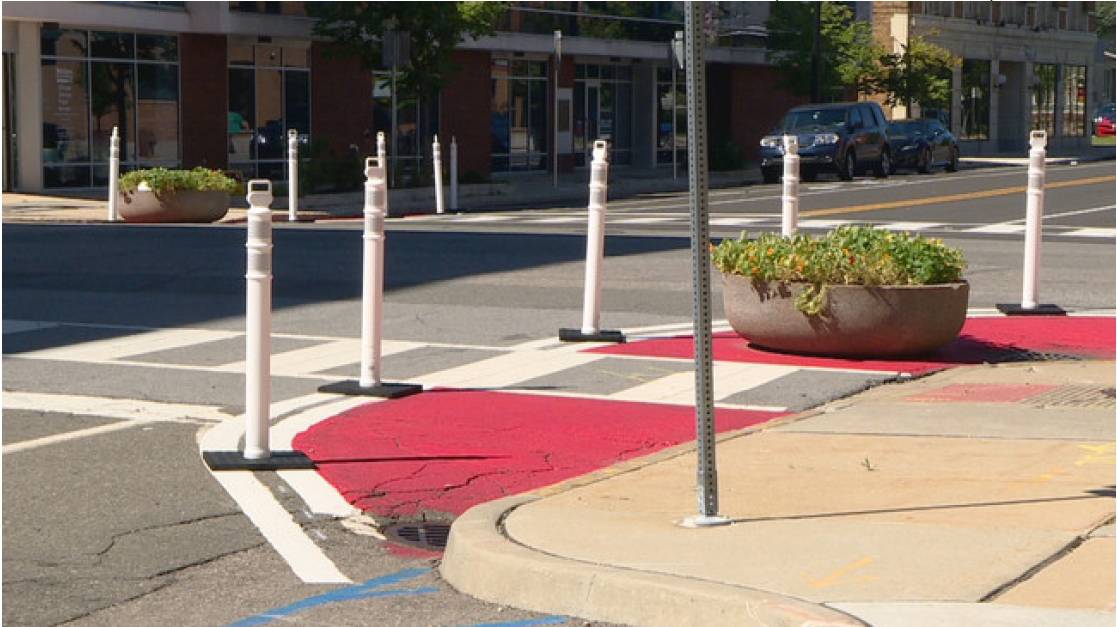
The township plans to add a multi-way stop sign at the intersection of Thornridge Drive and Teaberry Lane. In addition, curb extensions/bump-outs would be added at Thornridge Drive and Tanglewood Avenue and Thornridge Drive and Twin Leaf Lane along with reflectorized tubular/ raised delineators. The speed feedback sign on Thornridge Drive would continue to be used to encourage drivers to slow down and officials said another speed sign would be added heading southbound.
“They should be effective to help lower speeds,” Kennedy said of the traffic calming measures.
Kennedy collected more than 7,000 data readings. Of the data collected, he said one motorist was traveling at 55 miles per hour, while the second highest was driving 35 miles per hour on the 25 mile-per-hour roadway.
“The large majority of the speed is compliant,” Kennedy said.
Thornridge resident Nicole Paschke, who along with her mother, Margaret Marino, has been calling for measures to slow down traffic, suggested that the traffic calming strategies will not help enough.
“It’s the outliers that kill people,” Paschke told the board. “I see it right out in front of my window every single day.”
Falls Supervisor Vice Chair Erin Mullen said the township is “open” to making traffic calming permanent and said additional measures could be put in place at a later date, following periodic review. Even though Fire Marshal Rich Dippolito said previously that fire departments do not like speed humps because they slow down emergency services personnel, Mullen said “nothing is off the table.”
“It’s a lot of exploration,” Mullen said. “This is what it takes to figure out what we can do.”